

Boxing Rivalries That Shaped Eras and Defined Legacies
Blog / Dec 22,2025
Boxing rivalries are not created by promotion alone. They form when two fighters repeatedly bring out something extra in each other. Sometimes it is skill. Sometimes it is pride. Often, it is both. Over time, these matchups stop being single fights and turn into reference points for the sport.
This article looks at Boxing Rivalries that mattered, why they stood out, and how they earned their place among the greatest boxing rivalries in history. The focus here is context and clarity, not hype.
What Turns a Fight Into a Rivalry
A rivalry in boxing usually develops when outcomes are not clean or final. One fight leaves questions. The rematch adds tension. By the third meeting, the fighters are tied together whether they like it or not.
Common factors behind strong rivalries include:
- Multiple fights spread across years
- Competitive results or disputed decisions
- Styles that consistently clash
- Public interest that grows with each bout
Many Famous Boxing Rivalries did not start as historic matchups. They became significant because neither fighter could clearly separate himself from the other.
Top pick: 7 of The Most Unbreakable Boxing Records in Sporting History
Boxing Rivalries That Changed How Fans See the Sport
The biggest boxing rivalries often arrive at key moments. A title is on the line. An undefeated record is tested. A champion is challenged by someone who refuses to back down. These rivalries shape rankings, legacies, and sometimes even rules or training approaches.
Boxing Rivalries That Still Set the Standard
Some of boxing’s most competitive rivalries came from divisions where speed, volume, and precision mattered more than size.
Muhammad Ali vs. Joe Frazier
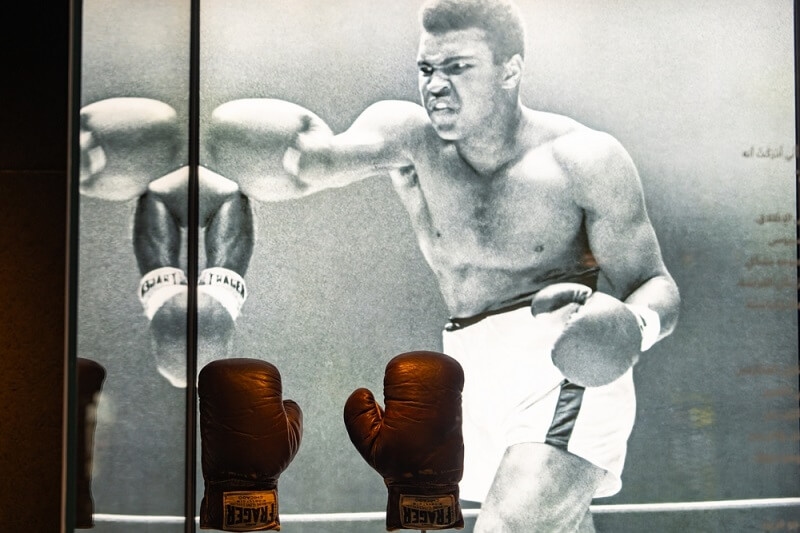
No discussion of greatest boxing rivalries in history works without Ali and Frazier.
They fought three times between 1971 and 1975. Each bout was physically exhausting and emotionally charged. Their rivalry was fueled by contrasting personalities, public pressure, and genuine competitiveness.
- Their first fight was one of the most watched events in boxing history
- Frazier handed Ali his first professional loss
- Their third fight in Manila pushed both fighters to physical limits
This rivalry defined heavyweight boxing in the 1970s and remains the benchmark for all others.
Sugar Ray Robinson vs. Jake LaMotta
This rivalry showed how different styles can produce long-term tension.
Robinson relied on speed, movement, and timing. LaMotta relied on pressure, durability, and inside fighting. They met six times.
- LaMotta was the first to defeat Robinson
- Robinson adapted and dominated later fights
- Their bouts are still studied for technical contrast
Among Famous Boxing Rivalries, this one is often cited for its instructional value rather than drama alone.
Manny Pacquiao vs. Juan Manuel Marquez
This is one of the most complete rivalries of the modern era.
Pacquiao and Marquez fought four times across nearly a decade. Each fight was close. Each result sparked debate.
- Tactical adjustments defined every meeting
- Neither fighter ever fully solved the other
- The rivalry ended with a decisive knockout
It is frequently listed among the biggest boxing rivalries because of its balance and longevity.
Arturo Gatti vs. Micky Ward
This rivalry was built on effort and resilience rather than belts.
Gatti and Ward fought three times. The first bout is often ranked among the most action-heavy fights ever.
- Constant exchanges
- Minimal clinching
- Clear mutual respect earned through punishment
When fans talk about Boxing Rivalries based on heart, this one is always mentioned.
Must Read: Black Murderers' Row: Boxing Legends Who Were Denied Titles
Famous Boxing Rivalries Beyond the Heavyweights
Barrera vs. Morales
Marco Antonio Barrera and Erik Morales produced one of the most respected trilogies in lighter weight boxing.
Their rivalry combined technical skill with aggression and national pride.
- High output fights
- Tactical shifts between bouts
- Clear personal tension
This trilogy remains one of the most studied Famous Boxing Rivalries in lower divisions.
Sugar Ray Leonard vs. Roberto Duran
This rivalry showed how preparation and discipline can shift outcomes.
- Duran controlled the first fight with pressure
- Leonard adjusted his approach in the rematch
- Their contrast highlighted mental strength as much as physical skill
It remains a key example of adaptation under pressure.
Evander Holyfield vs. Riddick Bowe
This heavyweight rivalry delivered competitive fights with changing momentum.
- Close rounds and disputed moments
- Shifts in dominance across bouts
- External drama that added attention
It is often included when listing the biggest boxing rivalries of the 1990s.
Why Some Rivalries Last and Others Do Not
Many matchups look promising but fade quickly. The difference is usually balance. When one fighter clearly dominates, the story ends. Rivalries survive when neither fighter can fully pull away.
The greatest boxing rivalries in history often share these traits:
- Competitive outcomes
- Clear adjustments between fights
- High stakes without forced narratives
- Fighters who remain relevant at the same time
These factors give fans a reason to stay invested.
Boxing Rivalries Across Different Generations
Earlier eras allowed fighters to meet more frequently, which helped rivalries grow naturally. Modern boxing has fewer rematches, making long rivalries harder to maintain.
Even so, Boxing Rivalries still play a major role. They help fans understand greatness, compare eras, and follow careers with context rather than isolated results.
You may also like: Greatest Boxing Legends: Fighters Who Left a Lasting Legacy
Final Takeaway: Why Boxing Rivalries Still Matter Today
Rivalries give boxing continuity. They connect individual fights into something larger. Without them, even elite performances can feel temporary.
The greatest boxing rivalries in history are remembered not because every fight was perfect, but because the competition felt real and unresolved until the end.
FAQs
Check out some of the frequently asked questions
What are the biggest boxing rivalries of all time?
Ali vs. Frazier, Robinson vs. LaMotta, Pacquiao vs. Marquez, and Gatti vs. Ward are widely considered the biggest boxing rivalries based on impact and competitiveness.
Why do boxing rivalries matter to fans?
Boxing rivalries provide context. They help fans evaluate fighters, understand legacies, and stay invested beyond a single match.
Are modern boxing rivalries less common?
Yes. Fewer rematches and promotional barriers make long-term rivalries harder to develop today, though they still happen.